
Building monitoring guide
How to monitor damp and mould in social housing
Social landlords in England now work to fixed timescales for serious damp and mould. Monitoring can help investigators understand conditions in the home and keep a clear record of what changed.
By Trace Metrix · Building investigation and monitoring
The context
Awaab’s Law sets the clock.
Since 27 October 2025, social landlords in England must investigate significant damp and mould hazards within 10 working days of being told, make the home safe within 5 working days of the investigation, and tell tenants the findings in writing within 3 working days of inspection. Emergency hazards must be made safe within 24 hours.
These timescales favour investigations that gather evidence quickly and record it clearly. This guide is general information, not legal advice; check the official guidance for your duties.
A monitoring approach
Five steps from report to findings.
- 01
Record the report and inspect promptly
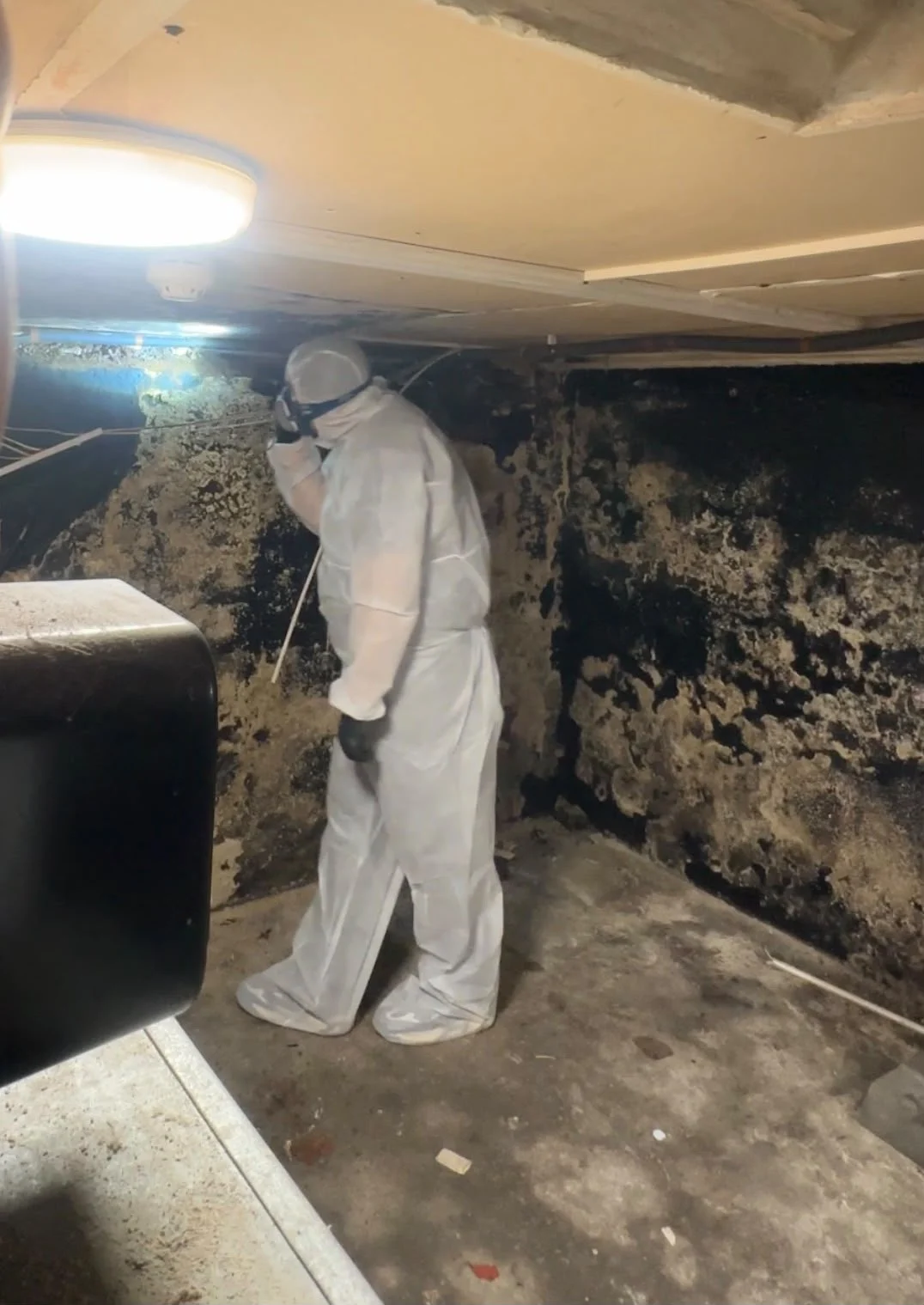
Monitoring does not replace an inspection. Log when the problem was reported, inspect the home and record what is visible: where mould appears, its extent, and the condition of walls, windows, ventilation and heating.
- 02
Place sensors around the question
Put one sensor in open room air as a reference and others near the affected area, such as a cold corner or external wall. Label each position clearly so readings can be compared fairly over time.
- 03
Check moisture within the wall where needed
Room humidity describes the air, not the wall. Where a wall is suspected, a deep-set humidity sensor can confirm moisture at that point within the wall, helping separate surface condensation from moisture in the fabric.
- 04
Keep monitoring through repairs
Readings taken before, during and after work give a record of how conditions change. Reporting intervals are user defined (15 minutes by default), and a 4G hub means monitoring does not depend on the tenant’s Wi-Fi.
- 05
Share clear findings
Combine readings with inspection notes and photographs in a written summary. Data supports the investigation and the decisions that follow; it does not diagnose the cause on its own.
Related guides
Plan the details.
Tell us what you need to understand.
Managing damp and mould cases across your homes? Tell us about the properties and we can discuss a monitoring approach.
Discuss a monitoring project