
Building monitoring guide
How to monitor damp and condensation in buildings
Temperature and humidity readings add a record between visits. Their value comes from a clear question, suitable measurement points and the inspection context that explains the building.
By Trace Metrix · Building investigation and monitoring
What monitoring can tell you
A timeline, not an automatic diagnosis.
A survey captures conditions at a visit. Monitoring helps show how temperature and humidity change between visits, so the observations can be compared with what was found on site. Air readings alone do not identify the moisture source or prove that a repair succeeded.
Relative humidity is not a direct measurement of material moisture content. If the question is whether a material is dry enough, it needs a suitable material measurement method—not an air humidity reading used as a substitute.
Planning the record
Five steps for a useful monitoring record.
- 01
Start with the question, not the sensor
Decide what you need the record to help explain. Are conditions changing between visits? Does a pattern coincide with heating or ventilation changes? Has the pattern changed after work? Monitoring gives those questions a timeline; it does not identify a moisture source on its own.
- 02
Choose and document measurement points
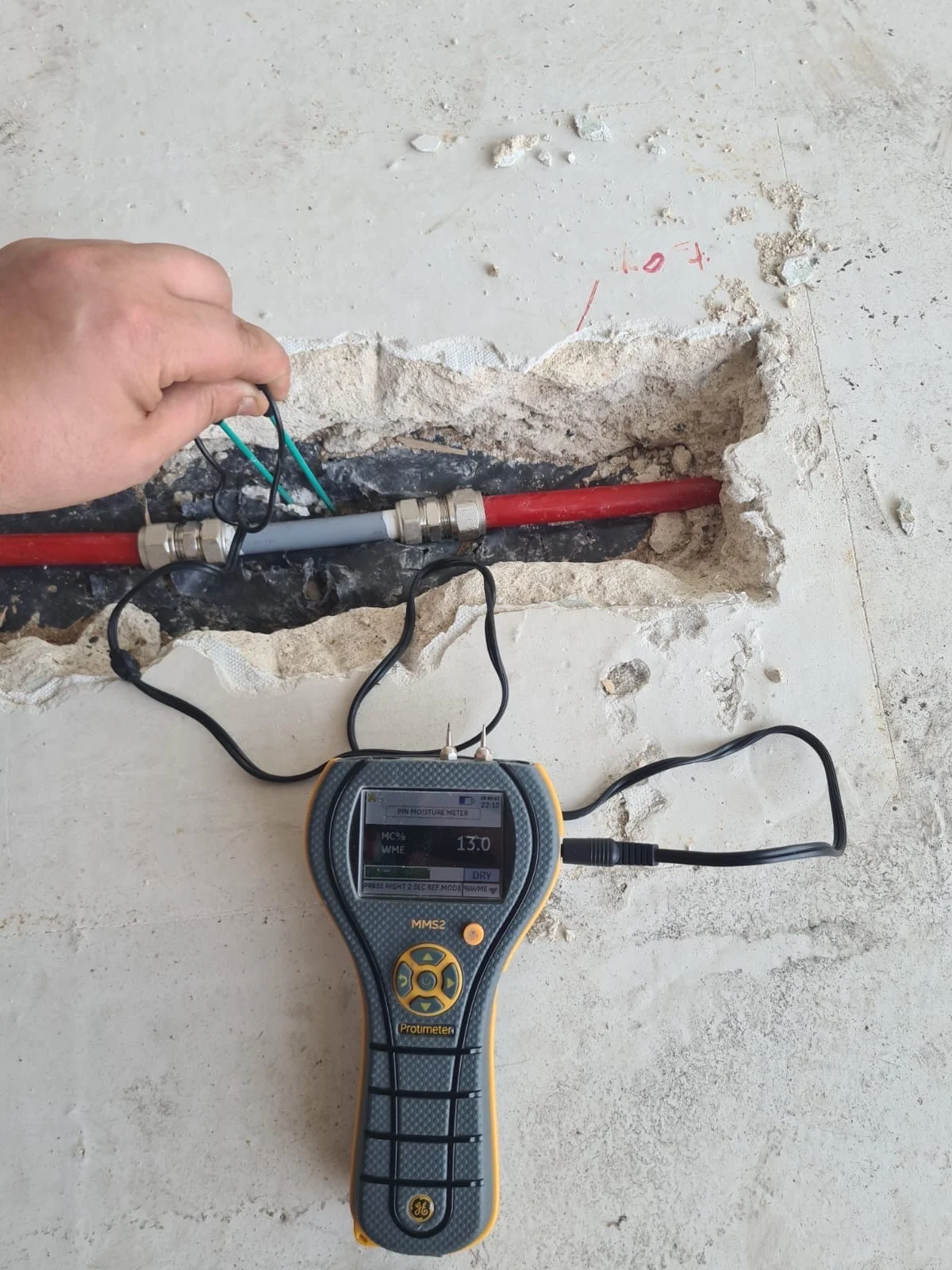
Agree locations that relate to the investigation and note the position of each sensor or probe. Ambient temperature and relative humidity describe surrounding air. A reading at a suitable probe access point describes local conditions there. Surface temperature is a different measurement again. Keep these distinctions visible when comparing records.
- 03
Keep the building context with the readings
Keep inspection findings, photographs and survey notes alongside the monitoring record. Record relevant changes in weather, heating, ventilation, building use and repair work. That context helps you judge whether two periods are suitable for comparison, rather than treating every change in the chart as a change in the building fabric.
- 04
Agree a review period and check data freshness
Choose how long to monitor around the question and when to review the results. Check when each device last reported before interpreting its readings. A timestamp tells you how current the information is; an old reading should not be mistaken for a description of conditions now.
- 05
Use the pattern to plan the next check
Read temperature and humidity together over time, then compare the pattern with the inspection record. Use the observations to focus a further visit or choose where a direct material check is needed. Keep the distinction between an observation and an explanation clear in the report.
From the record to the report
Keep the observations easy to review.
The existing Trace dashboard organises devices by site and brings together readings, alerts and survey notes. Its report builder uses a chosen site and date range, with summary statistics and notes. The modular sensor platform is in development; discuss the required measurement and current availability before planning a project.
About this guide
Based on the building-investigation approach of the people behind Trace Surveys and the existing Trace dashboard workflows. It is not a diagnosis of a particular building or a substitute for inspection.
Damp investigation at Trace SurveysTell us what you need to understand.
Tell us the building question, where readings are needed and what decision the record needs to support.
Discuss a monitoring project